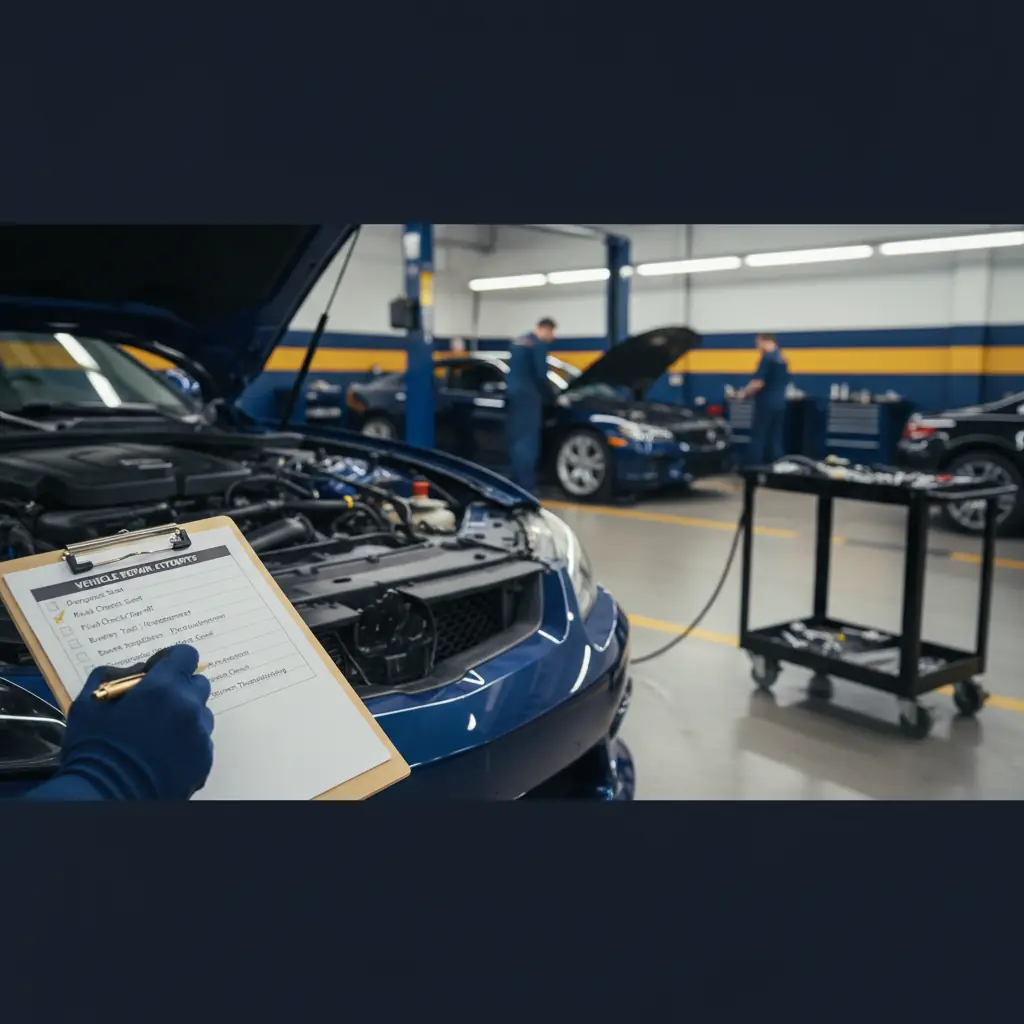
That sinking feeling in your stomach is all too familiar. The brand-new car you saved and planned for is spending more time in the service bay than in your driveway, and the manufacturer doesn't seem to have a solution. You followed all the rules and held up your end of the bargain, but you're left with a dangerously defective vehicle and a growing pile of repair invoices.
When your car is a lemon, California law provides powerful protections, and filing a lawsuit against the manufacturer may be the most effective path to resolution. The term "lawsuit" can sound intimidating, but it's a structured legal process designed to hold corporations accountable and secure the compensation you deserve. As attorneys dedicated to consumer rights, we believe understanding this process is the first step toward reclaiming your peace of mind.
What Legally Makes a Car a "Lemon" in California?
Before you can sue a car manufacturer for a defective vehicle, your situation must meet specific legal criteria outlined in California's primary lemon law, the Song-Beverly Consumer Warranty Act. This law is one of the strongest in the nation, providing a clear framework for when a car, truck, or SUV is legally considered a "lemon." It's not about minor annoyances; it's about substantial problems the manufacturer has failed to fix.
The Song-Beverly Consumer Warranty Act
First enacted in 1970, the Song-Beverly Consumer Warranty Act (California Civil Code §§1790-1795.8) protects consumers who buy or lease new vehicles that come with a manufacturer's warranty. The core of this law, found in section 1793.2, states that if a manufacturer or its representatives (like an authorized dealership) cannot repair a vehicle to conform to the warranty after a "reasonable number" of attempts, it must promptly replace the vehicle or offer a refund.
This means you are not at the mercy of endless repair visits. The law recognizes that at a certain point, enough is enough, and you are entitled to a working vehicle or your money back.
Defining a "Substantial Defect"
The law applies to defects that "substantially impair the use, value, or safety" of the vehicle. This is a critical distinction. A rattle in the glove box or a finicky radio preset might be annoying, but they likely won't qualify. A substantial defect, or "nonconformity," is a serious issue that undermines the fundamental reason you bought the car.
Examples of substantial defects include:
- Engine Problems: Stalling, overheating, or loss of power.
- Transmission Issues: Jerking, slipping gears, or failure to engage.
- Serious Electrical Failures: Malfunctioning dashboard displays, persistent warning lights, or faulty safety systems.
- Braking System Defects: Grinding, pulling to one side, or reduced stopping power.
- Steering Problems: Unresponsive steering, pulling, or excessive vibration.
- Fuel System Leaks: Any issue involving leaking gasoline or diesel is a major safety concern.
The defect must be covered by the manufacturer's original warranty. Problems caused by accidents, owner abuse, or unauthorized modifications are not covered under the lemon law.
What Is a "Reasonable Number of Repair Attempts"?
California law doesn't leave the definition of "reasonable" entirely up to interpretation. The Tanner Consumer Protection Act (California Civil Code §1793.22) provides a legal presumption that you have met the "reasonable attempts" requirement if any of the following occur within the first 18 months or 18,000 miles of delivery (whichever comes first):
- Four or More Repair Attempts: The manufacturer or its dealer has tried to fix the same substantial defect at least four times, and the problem persists.
- Two or More Repair Attempts for a Safety Defect: The defect is serious enough that it could cause death or serious bodily injury. If they have failed to fix it after just two attempts, the lemon law presumption may apply. Common examples include failures in the braking or steering systems.
- Thirty-Plus Days Out of Service: The vehicle has been in the repair shop for a cumulative total of more than 30 days for any combination of warranty-covered defects. These days do not need to be consecutive.
It's vital to understand that these are presumptions, not absolute requirements. If your vehicle's issues fall outside the 18-month/18,000-mile window, or if you have a particularly severe defect with fewer than four repair attempts, you can still have a valid lemon law claim. An experienced attorney can evaluate the specifics of your case and build a strong argument on your behalf.
Understanding the Legal Process: From Demand Letter to Resolution
When we say "suing a car manufacturer," most people picture a dramatic courtroom trial. In reality, the vast majority of lemon law cases are resolved through negotiation and settlement long before a trial becomes necessary. The process is a strategic series of steps designed to demonstrate the strength of your claim and compel the manufacturer to comply with the law.
Step 1: Gathering Your Documentation (The Evidence)
The foundation of a successful lemon law claim is meticulous record-keeping. Before an attorney can act, they need proof. Start organizing every piece of paper related to your vehicle, including:
- Purchase or Lease Agreement: This establishes the terms of your purchase and the date you took possession.
- Repair Orders: This is the single most important type of document. Every time you take your car to the dealership for a warranty issue, you must get a repair order. Insist that the service advisor writes down your exact complaint, word for word. When you pick up the car, review the "technician's notes" section to see what work was performed. These documents create the official timeline of your repair history.
- Communication Log: Keep a simple notebook or a digital file to track every conversation with the dealership or manufacturer. Note the date, time, the name of the person you spoke with, and a summary of the discussion.
- Photos and Videos: If the defect is intermittent or visible (like a malfunctioning screen or a leak), capture it on your phone. This can be powerful evidence.
Step 2: The Formal Demand Letter
Once you have retained a lemon law attorney, their first official action is typically to send a comprehensive demand letter to the manufacturer's legal department. This is not just a complaint letter; it is a formal legal document that:
- Identifies you and your vehicle (by VIN).
- Outlines the specific, substantial defects.
- Details the complete repair history, referencing each repair order.
- Asserts that the manufacturer has breached its warranty obligations under California law.
- Demands a specific remedy, usually a repurchase (buyback) or a replacement vehicle.
This letter signals to the manufacturer that you are serious and have legal representation. It initiates the formal dispute resolution process.
Step 3: Negotiation and Settlement
After receiving the demand letter, the manufacturer's attorneys will review your claim. They will examine your repair orders and compare them to their internal records. What happens next can vary. They may request to have their own field technician inspect the vehicle. More often, they will respond to your attorney with a settlement offer or a reason for denying the claim.
This is where having an experienced lemon law firm is invaluable. We are familiar with the tactics carmakers use, we know what constitutes a fair settlement under the law, and we can skillfully negotiate on your behalf to counter lowball offers and fight back against baseless denials. Our goal is to secure the maximum compensation you are entitled to without the need for a lengthy court battle.
Step 4: Filing a Lawsuit (If Necessary)
If the manufacturer refuses to make a fair settlement offer, your attorney will proceed with filing a formal lawsuit (a complaint) in civil court. This action significantly increases the pressure on the manufacturer. It triggers a phase called "discovery," where each side can legally demand evidence from the other. For example, your attorney can demand internal documents from the manufacturer about known issues with your vehicle model.
Filing a complaint does not mean a trial is inevitable. In fact, it often prompts the manufacturer to return to the negotiating table with a much more reasonable offer to avoid the time and expense of litigation.
What Can You Get in a Lemon Law Settlement?
If your claim is successful, California law provides for specific remedies to make you whole. The two primary outcomes are a repurchase or a replacement.
The Repurchase (Buyback)
This is the most common remedy. The manufacturer must buy the vehicle back from you. A full repurchase includes a refund for:
- Your down payment.
- All of your monthly loan or lease payments made to date.
- Your registration fees.
- Any remaining balance on your auto loan.
The manufacturer is allowed to deduct a small amount for the miles you drove the car without any issues. This is called the "mileage offset" or "use deduction." The formula is set by law (Cal. Civ. Code §1793.2(d)(2)(C)): the purchase price is multiplied by the number of miles you drove before the first repair attempt for the main defect, then divided by 120,000.
Example: You bought a car for $45,000 and first brought it in for a major transmission issue at 8,000 miles. The mileage offset would be: ($45,000 x 8,000) / 120,000 = $3,000. This amount would be subtracted from your total refund.
The Replacement Vehicle
You can also choose to receive a replacement vehicle instead of a refund. The manufacturer must provide you with a new car that is substantially identical to your original one. This means the same make, model, and features. While this sounds good, it can be complex. You are still responsible for a mileage offset, and finding an exact replacement can be difficult. Most consumers prefer the clean break of a buyback.
"Cash and Keep" Settlements
In some cases, you may be offered a third option: a "cash and keep" settlement. This is where you keep the vehicle and receive a cash payment from the manufacturer as compensation for the defect and the trouble you've endured. This can be a good option if the defect has finally been repaired or if it's something you can live with, and you would rather receive financial compensation for the diminished value of the car.
Why You Shouldn't Sue a Car Manufacturer Alone
While you technically can represent yourself, it is strongly discouraged. Car manufacturers are massive global corporations with entire departments of experienced lawyers who handle these claims every day. Attempting to sue them on your own puts you at a significant disadvantage.
Leveling the Playing Field
A qualified lemon law attorney understands the nuances of the Song-Beverly Act, the manufacturer's internal processes, and the value of your claim. We anticipate their legal arguments and know how to counter them effectively. We handle all communications, file all necessary paperwork, and navigate the complex legal system for you.
No Out-of-Pocket Fees for You
The best part of California's lemon law is its consumer-friendly fee-shifting provision. California Civil Code §1794(d) mandates that if you prevail in your claim, the manufacturer is required to pay all of your attorney's fees and legal costs. This provision was included to ensure that every consumer, regardless of their financial situation, can afford expert legal representation.
This is why our firm, LemonLaws.com, and other reputable lemon law attorneys work on a contingency basis. We only get paid if we win your case, and our fees are paid by the manufacturer. You pay nothing out of pocket.
Added Federal Protections
In addition to state law, the federal Magnuson-Moss Warranty Act (15 U.S.C. §§2301-2312) offers another layer of protection for consumers. It governs warranties on all consumer products and also contains a fee-shifting provision, allowing us to pursue claims under both state and federal law to build the strongest possible case for you.
Frequently Asked Questions About Suing a Car Manufacturer
Does the lemon law apply to used cars?
Yes, but only in specific situations. California's lemon law covers used cars that are still under the original manufacturer's new car warranty. It can also apply if you purchased a "Certified Pre-Owned" vehicle that came with a manufacturer-backed warranty, or if the defects arose during the term of a dealer-provided warranty.
How long do I have to file a lemon law claim in California?
The statute of limitations for filing a lemon law lawsuit in California is four years. However, the clock can start ticking from different points depending on the specifics of your case. It is critical not to wait. The longer you delay, the more difficult it can be to prove your case, so you should contact an attorney as soon as you suspect your car might be a lemon.
What if I leased my vehicle instead of buying it?
The California lemon law provides the exact same protections for leased vehicles as it does for purchased ones. If you win your claim on a leased vehicle, the manufacturer must pay off the lease agreement and refund your down payment, monthly payments, and fees, minus the mileage offset.
Will filing a lemon law claim hurt my credit score?
No. A lemon law claim is a legal dispute between you and the car manufacturer regarding a defective product. It is not a credit-related issue and is not reported to credit bureaus. Your claim will not appear on your credit report or affect your score.
Enduring the stress of a defective vehicle is frustrating and unfair. You made a significant investment, and you have the right to a safe, reliable car that lives up to its warranty. Suing a car manufacturer is your legal right, and the law is specifically designed to protect you in this fight. You do not have to navigate this complicated process alone.
The team at LemonLaws.com is committed to defending consumer rights and holding manufacturers accountable. If you are struggling with a potential lemon, we invite you to contact us for a free, no-obligation consultation. We will listen to your story, review your documents, and give you a clear and honest assessment of your case. Remember, because of California's fee-shifting laws, you pay no out-of-pocket fees. Let us put our expertise to work for you.
Bottom line: If your vehicle has been in for repeated repairs under warranty, you may have a strong lemon law claim. A free consultation costs you nothing.
Think Your Car Is a Lemon?
Get a free case evaluation from our experienced attorneys. No fees until we win.