That sinking feeling in your stomach when a new vehicle starts having problems is universal. Whether it’s a car that won’t start, a truck with a faulty transmission, or an RV with engine trouble, the frustration is the same: you spent your hard-earned money on a product that doesn’t work. Many people know that California has strong consumer protection laws for defective cars, but they often wonder just how far those protections go.
At LemonLaws.com, we want to clarify that California’s lemon law covers a much broader range of vehicles than most people realize. The law is designed to protect consumers from being stuck with defective products, and its reach extends far beyond the typical family sedan. Understanding what is covered is the first step toward asserting your rights.
The Foundation: California’s Song-Beverly Consumer Warranty Act
Before we dive into specific vehicle types, it’s helpful to understand the primary law at play. California’s lemon law is not a single statute but a part of the Song-Beverly Consumer Warranty Act, found in California Civil Code sections 1790-1795.8. This powerful act provides broad protections for anyone who buys or leases a "consumer good" in California that comes with a manufacturer’s warranty.
A "consumer good" is simply a new product intended for personal, family, or household purposes. While the lemon law has very specific rules for "new motor vehicles," the Song-Beverly Act’s general protections can cover a wide array of products, from kitchen appliances to, in some cases, boats and off-road vehicles. The core principle is that if a manufacturer cannot repair a substantial defect after a reasonable number of attempts, they must either replace the item or refund the buyer’s money.
What "New Motor Vehicle" Really Means under California's Lemon Law
The strongest lemon law protections are reserved for what the law defines as a "new motor vehicle." This is where the well-known "lemon law presumption" comes into play, making it easier for a consumer to prove their case. Under the Tanner Consumer Protection Act (Cal. Civ. Code section 1793.22), a vehicle is presumed to be a lemon if, within the first 18 months or 18,000 miles of use, any of the following occur:
- The same nonconformity has been subject to four or more repair attempts. A nonconformity is a defect that substantially impairs the vehicle's use, value, or safety.
- The vehicle has been out of service for repair for more than 30 cumulative days.
- A safety-related nonconformity has been subject to two or more repair attempts.
If you meet one of these thresholds, the burden of proof shifts to the manufacturer to prove your vehicle is not a lemon. Now, let's look at which specific vehicles fall under this powerful "new motor vehicle" protection.
Passenger Cars, Trucks, and SUVs
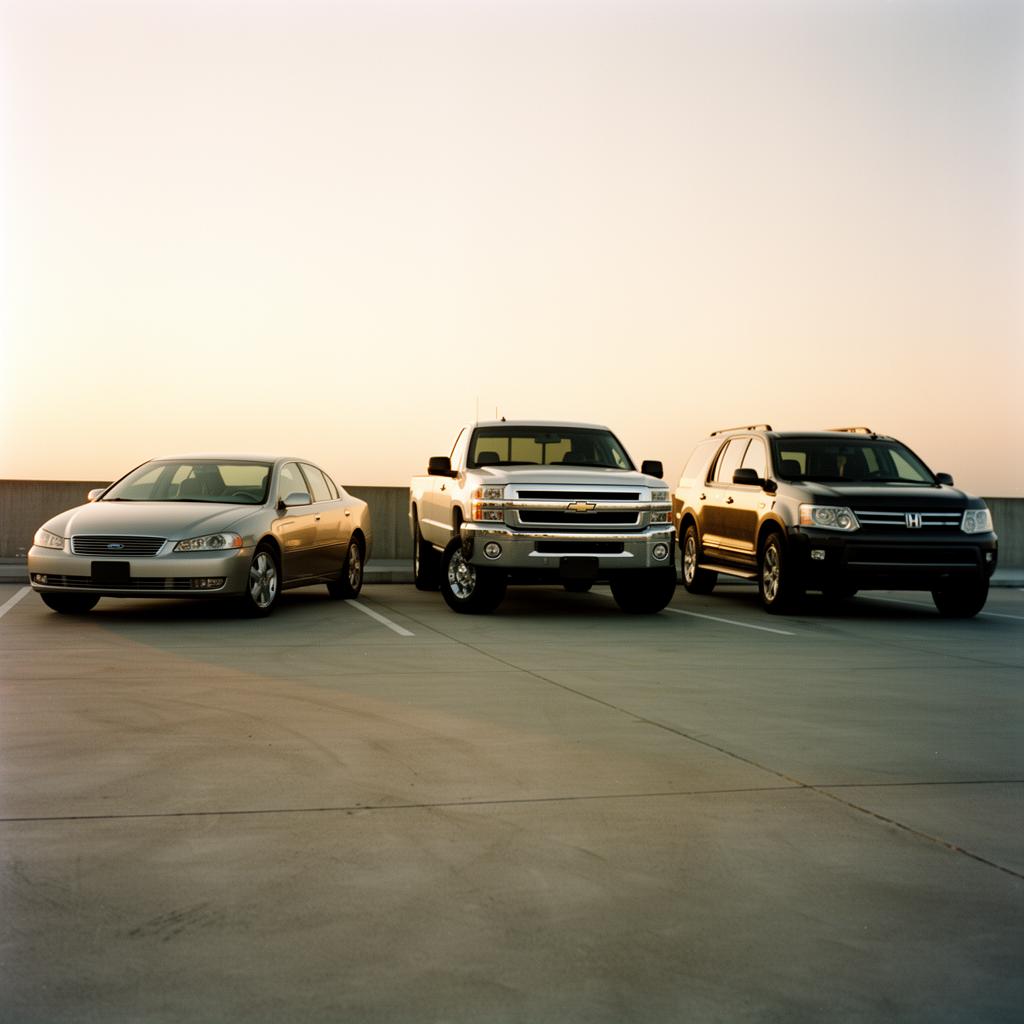
This is the category most people associate with the lemon law, and for good reason. Any new car, truck, or SUV purchased or leased in California for personal use is covered. This includes:
- Sedans, coupes, and hatchbacks
- Sport Utility Vehicles (SUVs) of all sizes
- Minivans and passenger vans
- Pickup trucks
If you buy or lease a new vehicle from any of these categories and experience a recurring issue like a faulty transmission, persistent check engine lights, or failing electrical systems, you are protected. Remember to keep detailed records of every repair visit, including the date, the reported problem, the mileage, and the work performed by the dealership.
The "Chassis Cab" Rule: RVs and Motorhomes
This is a frequent point of confusion for consumers. Does the lemon law cover a motorhome with a leaky roof or a defective refrigerator? The answer is specific. California’s lemon law explicitly covers the chassis, chassis cab, and powertrain of a motorhome.
Under Cal. Civ. Code section 1793.22(e)(2), the "new motor vehicle" definition includes the chassis portion of a motorhome. This means defects related to the following are covered:
- The engine
- The transmission
- The brakes and steering
- The frame and drivetrain
- Other essential driving components
Example Scenario: You buy a new Class A motorhome. Within the first year, the engine repeatedly overheats, and after four repair attempts, the dealer still can't fix it. This is a classic lemon law case for the chassis portion of the vehicle. You would be entitled to a repurchase or replacement.
However, defects in the "living quarters" of the motorhome, such as appliances, plumbing, or cabinetry, are generally not covered by the motor vehicle lemon law presumption. These components are instead treated as separate consumer goods under the broader Song-Beverly Act. This means you still have rights, but the process and remedies might differ, and the strict 30-day/4-attempt presumption may not apply to a faulty RV microwave.
Motorcycles and Off-Highway Motor Vehicles
Yes, motorcycles are explicitly covered under California’s lemon law as "new motor vehicles," provided they are registered for on-road use. If your new bike has a persistent engine, brake, or electrical problem that the manufacturer can’t fix, you have the same rights as a car owner.
What about vehicles designed for off-road use, like All-Terrain Vehicles (ATVs), dirt bikes, or UTVs? These do not fall under the "new motor vehicle" definition. However, they are considered "consumer goods" under the Song-Beverly Act. This means if you buy a new ATV with a manufacturer’s warranty and it has a substantial defect, you are still protected. The manufacturer must make a reasonable number of attempts to repair it. If they fail, they are obligated to provide a refund or replacement.
Coverage for Used Vehicles: A Common Misconception
Many people assume the lemon law applies only to brand-new vehicles. This is not entirely true. A used vehicle can absolutely qualify for lemon law protection in California under specific circumstances.
The Remaining Manufacturer's Warranty
If you purchase a used car that is still covered by the original manufacturer’s bumper-to-bumper or powertrain warranty, the lemon law still applies. The protection is tied to the warranty, not to the first owner.
Example Scenario: You buy a 2-year-old truck with 20,000 miles on the odometer. The original manufacturer's warranty was for 3 years or 36,000 miles. A month after you buy it, the transmission begins to slip. This is the third time this exact problem has been documented for this truck (twice with the previous owner). If you take it in for a fourth time and it's still not fixed, the vehicle may be presumed a lemon, even though you are the second owner.
Certified Pre-Owned (CPO) and Dealer Warranties
Many used cars are sold as "Certified Pre-Owned," which means they come with a special manufacturer-backed warranty. Problems that arise and are covered under this CPO warranty can also trigger lemon law protections. The same goes for any written warranty provided by the dealership at the time of sale. The key is the existence of an express written warranty.
"As-Is" Sales and Private Party Sales
If you buy a vehicle "as-is," it means you are accepting it in its current condition, and the seller has no legal obligation to repair it. These sales typically do not come with any lemon law protection. Likewise, sales between two private individuals are not covered by the lemon law, as the law applies to manufacturers and retail sellers.
Leased Vehicles: Yes, You're Absolutely Covered
California law is clear: lemon law protections apply equally to purchased and leased vehicles. The definition of "new motor vehicle" in the Tanner Consumer Protection Act explicitly includes leased vehicles. If you lease a defective vehicle, you are entitled to the same remedies as someone who purchased it. The manufacturer would be required to refund your down payment, your monthly payments, and pay off the remaining balance of the lease, then take the vehicle back.
Special Cases and Exclusions
While the law is broad, there are some important limits and special conditions to be aware of.
Business and Commercial Vehicles
If you use your vehicle for work, it may still be covered. The law extends lemon law protection to vehicles owned by a small business as long as:
- The business has five or fewer vehicles registered in its name in California.
- The vehicle in question has a gross vehicle weight (GVW) under 10,000 pounds.
This means a plumber with a single work van or a real estate agent with a small SUV used for business can still have a valid lemon law claim. However, a large construction company with a fleet of 20 heavy-duty trucks would not be covered under this provision.
Out-of-State Purchases
To qualify for protection under California’s lemon law, the vehicle must have been purchased or leased in California. If you are a California resident but bought your car in Nevada or Arizona, you would need to look to that state’s laws or the federal Magnuson-Moss Warranty Act (15 U.S.C. Sections 2301-2312) for protection.
Recent Law Changes to Know
California’s consumer protection laws are constantly evolving. For example, Assembly Bill 1755, signed in 2024, expands the lemon law presumption for electric vehicles. It creates a separate, longer presumption for the battery component, extending the period to 24 months or 24,000 miles for defects related to the traction battery. This is a significant update that reflects the growing EV market and provides greater peace of mind for EV owners.
Frequently Asked Questions
Q: The problems with my car started during the warranty, but the warranty has now expired. Can I still file a claim?
A: Yes, absolutely. The lemon law is concerned with when the-defect first arose and when the repair attempts were made. As long as you presented the vehicle for repair for a warrantable issue while the warranty was still active, your claim is valid even if the warranty expires during the repair process or before you file a claim.
Q: I bought my car from a private seller, not a dealership. Is it covered?
A: Generally, no. California’s lemon law applies to consumer goods sold by manufacturers and distributors. A private party sale, where one individual sells to another, is not covered. The only rare exception might be if the original manufacturer’s warranty was still in effect and properly transferred to you at the time of sale.
Q: What if I modified my car? Does that void my lemon law rights?
A: Not necessarily. A manufacturer cannot deny a warranty claim just because a vehicle has aftermarket parts. They must prove that your specific modification was the direct cause of the defect you are experiencing. For instance, if you installed a new stereo system and your transmission fails, the manufacturer cannot blame the stereo. However, if you installed a turbocharger and the engine blows, they would have a strong argument that your modification caused the failure.
Q: Does a trailer count as a vehicle under the lemon law?
A: A trailer is a good example of the distinction between a "consumer good" and a "new motor vehicle." A travel trailer or utility trailer is not a motor vehicle because it is not self-propelled. However, it is a consumer good. If it comes with a manufacturer’s warranty and has a substantial defect (like a faulty axle or a structural crack), it is covered by the broader protections of the Song-Beverly Act.
How LemonLaws.com Can Help
Understanding which vehicles are covered is the first step, but pursuing a lemon law claim can be a complex process. Manufacturers and dealerships often have powerful legal teams dedicated to minimizing their liability. You deserve an expert in your corner, fighting to protect your rights.
Our team at LemonLaws.com focuses exclusively on California lemon law. We have helped countless consumers get the justice they deserve. If you believe you have a lemon, we invite you to contact us for a free, no-obligation consultation. We will listen to your story, review your repair documents, and give you a clear assessment of your case. If we take your case, you pay no out-of-pocket fees. California law includes a fee-shifting provision (Cal. Civ. Code section 1794(d)) that requires the manufacturer to pay your attorney’s fees and costs if you win. Don’t wait and let your rights expire. Contact us today.
Bottom line: If your vehicle has been in for repeated repairs under warranty, you may have a strong lemon law claim. A free consultation costs you nothing.
Think Your Car Is a Lemon?
Get a free case evaluation from our experienced attorneys. No fees until we win.