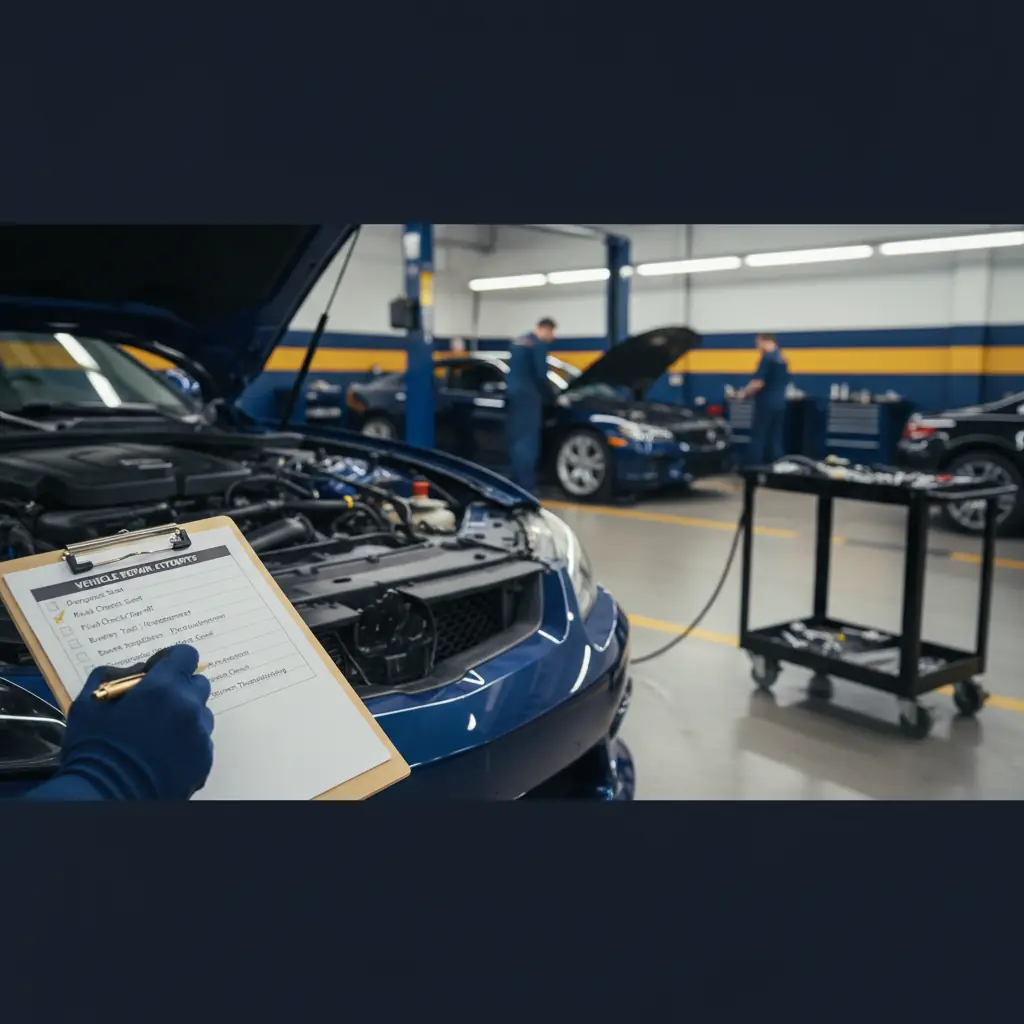
You might expect a quick turnaround when you drop off your car at the dealership for repairs. However, sometimes, what starts as a day or two of work can extend into weeks.
That sinking feeling is all too familiar: you drop your car at the dealership for what seems like a simple fix, but days turn into weeks. The service advisor’s updates become less frequent, and you’re left without your vehicle, wondering what your rights are. If your car is spending more time in the shop than on the road, it’s not just an inconvenience, it’s a significant disruption to your life and may be a violation of your consumer rights under California law.
The Core Question: Is There a Strict Time Limit for Repairs?
Legally, there is no single, fixed number of days that a dealership can hold your car for a repair. A simple oil change should take hours, while a complex transmission rebuild might reasonably take several days. The law, however, does not give manufacturers and their dealerships unlimited time. The central concept guiding repair duration is what is considered a "reasonable" amount of time.
This standard of reasonableness is the foundation of California’s primary consumer protection law, the Song-Beverly Consumer Warranty Act (California Civil Code sections 1790-1795.8). This act states that if a vehicle under warranty has a defect, the manufacturer or its representative, like a dealership, must begin repairs within a reasonable time and complete them within 30 days. While this 30-day window is a strong guideline, the true power of the law comes from how it defines when a manufacturer has had a "reasonable number of repair attempts" to fix the problem.
California's Lemon Law and the "Reasonable Number of Repair Attempts"
When your car is stuck at the dealership for an extended period, it often triggers protections under California's Lemon Law. The Lemon Law is not a separate piece of legislation but is part of the Song-Beverly Act, with specific clarifications provided by the Tanner Consumer Protection Act (California Civil Code section 1793.22). It is designed to protect consumers who have purchased or leased new vehicles that suffer from a "nonconformity," which is any defect or condition covered by the warranty that substantially impairs the vehicle's use, value, or safety.
The law requires the manufacturer to either replace the defective vehicle or repurchase it if they are unable to repair the nonconformity after a reasonable number of attempts. So, what constitutes a "reasonable number of attempts"? The law gives us a powerful guideline called the "Lemon Law Presumption."
Defining "Reasonable" with the Lemon Law Presumption
The Tanner Consumer Protection Act creates a legal presumption that the manufacturer has had a reasonable opportunity to repair your vehicle if, within the first 18 months or 18,000 miles of use (whichever comes first), one of the following occurs:
- The vehicle is out of service for repair for a cumulative total of more than 30 days. This is the most direct answer to how long is too long. The days do not need to be consecutive.
- The same non-safety-related nonconformity has been subject to four or more repair attempts. For example, a persistent check engine light or a faulty infotainment system that the dealer has tried to fix multiple times.
- A serious safety-related nonconformity has been subject to two or more repair attempts. This includes defects involving critical systems like brakes, steering, or airbags.
Meeting one of these criteria creates a "presumption" that your vehicle is a lemon. This is a significant legal advantage. It shifts the burden of proof from you having to prove the car is a lemon to the manufacturer having to prove that it is not a lemon. Even if your vehicle's issues arise outside the 18-month or 18,000-mile window, you can still have a valid lemon law claim, but the legal presumption may not automatically apply.
A Closer Look at the 30-Day Rule
The 30-cumulative-day threshold is a critical benchmark for consumers whose cars seem to be permanently parked at the service center. It’s important to understand how this is calculated. The clock starts ticking from the moment you drop off your vehicle for repair of a warranty-covered defect and stops when the dealership notifies you that it is ready for pickup.
Let's walk through a common scenario:
- Visit 1: Your new car’s engine is overheating. You leave it at the dealership for 12 days.
- Visit 2: A month later, the same problem occurs. The dealer keeps it for another 7 days.
- Visit 3: The overheating issue returns again. This time, the repair takes 13 days because the dealer is "waiting on a part."
In this scenario, your vehicle has been out of service for a cumulative total of 32 days (12 + 7 + 13). Because this exceeds the 30-day threshold and occurred within the presumption period, your vehicle is presumed to be a lemon under California law.
Common dealership excuses like "parts are on backorder" or "we're waiting for a factory field technician" do not stop the 30-day clock. While these reasons may explain the delay, they do not excuse the manufacturer from its legal obligation. The inconvenience and loss of use you suffer are the same, regardless of the cause of the delay.
What if the 30-Day Threshold Isn't Met?
Your car can still qualify as a lemon even if it has not been in the shop for 30 cumulative days. The other prongs of the Lemon Law Presumption are equally powerful.
-
4+ Repair Attempts: Imagine your car has a severe transmission shudder. You've taken it in for repair four separate times. Each repair only took a few days, so your cumulative time in the shop is only 15 days. However, because the manufacturer has failed to fix the same substantial issue after four attempts, the lemon law presumption still applies.
-
2+ Repair Attempts for a Safety Defect: The standard is even stricter for safety issues. If your vehicle’s automatic emergency braking system engages randomly, and you have taken it to the dealer twice for the same issue without a successful fix, you have likely met the threshold. The law recognizes that consumers should not have to risk their safety repeatedly while a manufacturer tries to figure out a fix.
Your Rights and the Manufacturer's Obligations
Wondering if your situation qualifies?
Once it is established that your vehicle is a lemon, the manufacturer has two primary obligations to you, the consumer. Importantly, the choice between these remedies belongs to you, not the manufacturer.
The Right to a Repurchase (Lemon Law Buyback)
The most common remedy is a repurchase, often called a buyback. The manufacturer must refund the money you have spent on the vehicle, which includes:
- The down payment
- All monthly payments made (for finance or lease)
- The payoff of any outstanding loan balance
- Collateral charges like sales tax, registration fees, and financing charges.
The manufacturer is entitled to deduct a "mileage offset" or usage fee for the miles you drove the vehicle before the first repair attempt for the defect. The formula is prescribed by law (Cal. Civ. Code § 1793.2(d)(2)(C)): the number of miles at the first repair attempt is divided by 120,000 and then multiplied by the vehicle’s purchase price.
The Right to a Replacement
Alternatively, you can choose to receive a replacement vehicle. The manufacturer must provide a new vehicle that is substantially identical to your current one. It must be the same model from the same manufacturer with similar features. The manufacturer is also responsible for paying the sales tax and registration fees for the replacement vehicle. You are not responsible for any mileage offset if you choose this option. Many consumers prefer the buyback, as they have often lost faith in the manufacturer's products.
Steps to Take When Your Car is Stuck in the Shop
If you find yourself in this frustrating situation, being proactive is key to protecting your rights.
Document Everything Meticulously
Your best evidence is a detailed paper trail. For every interaction with the dealership, you should keep records of:
- Dates: The date you dropped off the vehicle and the date you were notified it was ready.
- Repair Orders: Insist on receiving a legible copy of the repair order every time your car is serviced, even if the technicians "could not duplicate the problem."
- Communication: Note the names of the service advisors you speak with, the dates of the conversations, and a summary of what was discussed.
- Receipts: Keep all receipts for rental cars, ride-sharing services, or other costs you incur because you are without your vehicle.
Understand the Repair Order
The repair order is the single most important document in a lemon law case. When you pick up your car, review the repair order carefully. It should clearly state your original complaint, the technician's diagnosis, and the specific repairs that were performed. If the paperwork is vague or just says "checked vehicle," ask for a more detailed explanation to be added before you sign.
Know When to Consult a Lemon Law Attorney
If your car is approaching the 30-day mark in the shop, or if it's been in for the same problem multiple times, it is time to seek professional legal advice. Manufacturers often use delay tactics or make lowball offers to unrepresented consumers. An experienced lemon law attorney can assess your situation, confirm if you have a valid claim, and handle all communications with the manufacturer on your behalf.
New Laws Are Strengthening Your Rights
The legal environment is constantly evolving to keep up with vehicle technology. Lawmakers have recently passed legislation that further protects consumers. For example, AB 1755 (effective in 2024) clarifies that over-the-air software updates can count as a repair attempt under the lemon law. This is critical as manufacturers increasingly try to fix issues remotely. Similarly, laws like the proposed SB 766 (CARS Act) aim to give consumers more control over their vehicle's electronic data, which can be crucial in diagnosing and proving persistent defects.
Frequently Asked Questions (FAQ)
Does the dealership have to provide a loaner car while mine is being repaired?
California law does not automatically require the manufacturer to provide a loaner car. However, many manufacturer warranties do include provisions for a loaner or rental car reimbursement if a warranty repair takes more than one day. Check your warranty booklet. If a loaner is provided, the time your car is in the shop still counts toward the 30-day cumulative total.
What if the dealership says the delay is because parts are on backorder?
A parts delay does not stop the 30-day clock. The manufacturer has a legal duty to maintain a sufficient supply of service parts. While a short delay might be seen as reasonable, extended backorders that push your car's time out of service past 30 days can, and often do, trigger the lemon law presumption.
Does the lemon law apply to used cars?
Yes, under certain conditions. California's Lemon Law applies to used cars that are still covered by a manufacturer's original new car warranty. It also applies to vehicles sold with a certified pre-owned (CPO) warranty. Furthermore, the federal Magnuson-Moss Warranty Act can provide protections for consumers who purchase a used car with a dealer-provided written warranty.
All my repairs have been free under warranty, so do I still have a case?
Absolutely. The lemon law is not about the cost of repairs; it's about the "loss of use" and the failure of the manufacturer to provide you with the reliable vehicle you paid for. The fact that the repairs were covered by the warranty is a prerequisite for a lemon law claim, not a defense against one.
If you are tired of waiting for the dealership and feel that your car has spent far too much time in the repair shop, you do not have to accept the situation. We at LemonLaws.com are here to help you understand and assert your rights. We offer a free, no-obligation consultation to review your case and explain your options. Under California’s Song-Beverly Act, there are no out-of-pocket fees for our services. The law includes a fee-shifting provision (Cal. Civ. Code § 1794(d)) that requires the manufacturer to pay your attorney's fees and costs if you win your case. Contact us today, and let us help you get back on the road.
Think Your Car Is a Lemon?
Get a free case evaluation from our experienced attorneys. No fees until we win.