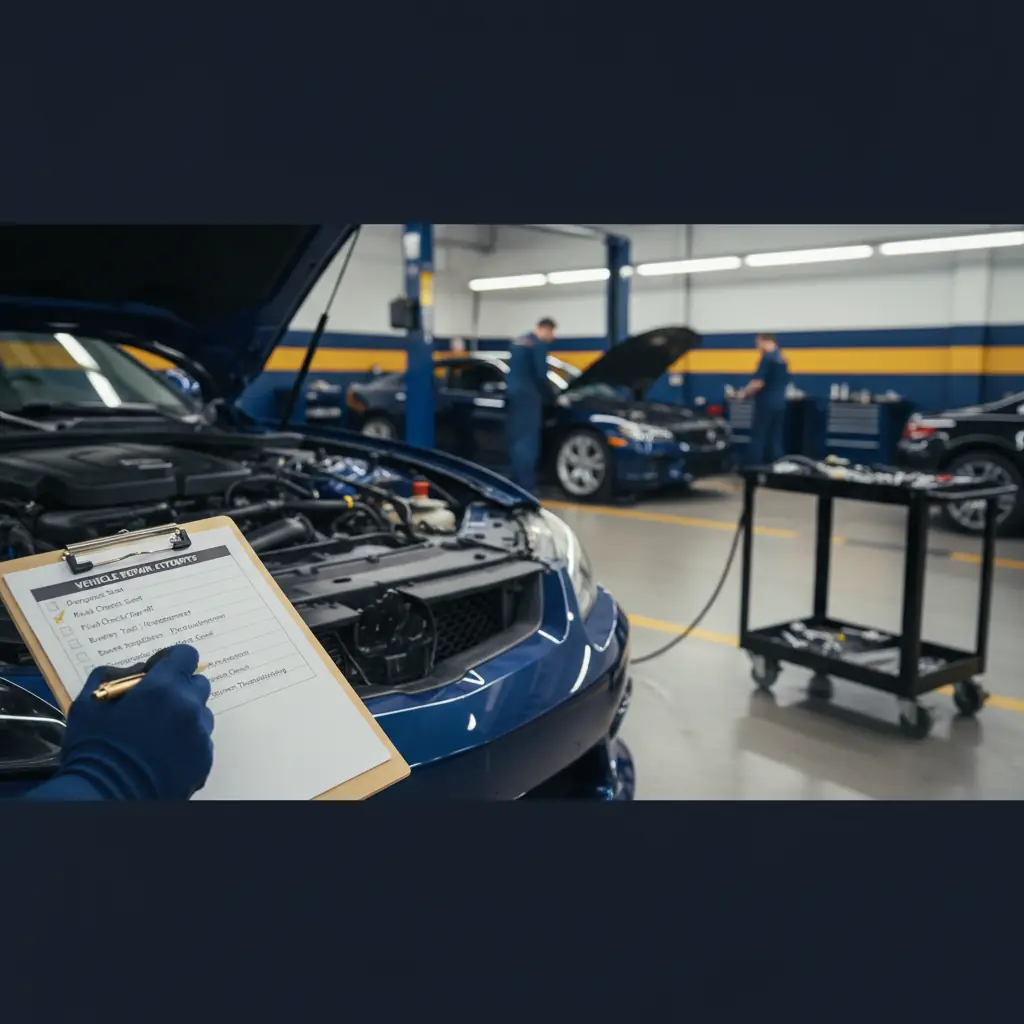
Everything you need to know about how to file a lemon law claim in California — from documenting repeat repairs and notifying the manufacturer to understanding deadlines and pursuing a buyback or replacement.
If your vehicle keeps returning to the dealership for the same warranty problem, you do not have to simply continue authorizing repairs indefinitely. California's Song-Beverly Consumer Warranty Act provides replacement or restitution remedies when a qualifying new motor vehicle cannot be brought into conformity with its applicable express warranties after a reasonable number of repair attempts.
For broader statewide information, see our California lemon law service areas.
Ready to have your repair history reviewed? Our attorneys can evaluate your records, explain which process applies to your situation, and help you understand what options may be available. Free Case Evaluation
What Does It Mean to File a Lemon Law Claim?
Starting a California lemon law claim does not mean completing one standard state claim form. Depending on your circumstances, the process can involve several different steps:
- Documenting the warranty problem and every opportunity to repair it
- Reviewing whether the repair history supports a lemon law remedy
- Notifying or making a formal demand on the manufacturer when appropriate
- Pursuing negotiation, qualifying dispute resolution, or a civil action if necessary
California does not impose the same pre-suit procedure on every claim. The manufacturer involved, the remedy being pursued, and whether newer statutory procedures apply can affect what must happen before a lawsuit is filed.
Do You Have a Claim Worth Filing?
A California lemon law claim generally begins with a problem covered by an applicable express warranty and a repair history showing that the manufacturer or its authorized facilities had opportunities to address it.
Consider these four factors:
1. Warranty Coverage
The problem should fall within the applicable warranty rather than arise solely from damage, misuse, or an issue outside warranty coverage.
2. Repair History
Repair orders should show when the problem was reported, what work was performed, and whether the condition returned.
3. Tanner Act Presumption
Within the first 18 months after delivery or 18,000 miles, whichever occurs first, a rebuttable presumption may apply when:
- A condition likely to cause death or serious bodily injury has been subject to repair two or more times, with direct manufacturer notice when the statute requires it
- The same nonconformity has been subject to repair four or more times, again subject to applicable manufacturer-notice requirements
- The vehicle has been out of service for repairs of nonconformities for more than 30 cumulative calendar days
4. Overall Circumstances
Even if the Tanner Act presumption does not apply, the broader question is still whether the manufacturer received a reasonable opportunity to conform the vehicle to its applicable warranty.
Important: The Tanner thresholds are not a universal qualification checklist. Failing to meet one of those presumptions does not automatically mean there is no lemon law claim.
The 5-Step Lemon Law Claim Process
Step 1 — Document Every Repair Attempt
Save every repair order, final invoice, warranty record, and important dealership communication. Confirm that the paperwork accurately records your complaint, mileage, service dates, and the work performed. Keep "no problem found" or "could not duplicate" records as well — they can document when you presented the recurring concern.
Step 2 — Organize Your Repair History
Put the records in chronological order and note when the problem first appeared, each dealership visit, whether the symptoms continued afterward, and how long the vehicle remained out of service. This makes it easier to evaluate the repair pattern against California's reasonable-repair-opportunity standard and the Tanner Act presumptions.
Step 3 — Notify or Demand Action From the Manufacturer
A written demand can summarize your vehicle, defects, repair history, and requested remedy. California law does not impose one universal demand-letter requirement on every Song-Beverly claim, but special pre-suit rules apply to certain actions against manufacturers that elected into Code of Civil Procedure Chapter 12. A consumer seeking civil penalties under that procedure generally must give written notice at least 30 days before filing and include the required vehicle and repair information.
Our guide to the formal demand and lawsuit process explains what commonly happens at this stage.
Step 4 — Negotiate, Use Dispute Resolution, or File Suit
The manufacturer may agree to a remedy, ask for additional documentation, dispute the claim, or make another proposal. State-certified manufacturer arbitration programs can provide a free dispute-resolution option, and use of a qualifying third-party process can affect when the Tanner presumption may be asserted if the statutory notice requirements were satisfied. If the claim cannot be resolved outside court, a civil action may be considered.
Step 5 — Complete the Agreed Remedy
Wondering if your situation qualifies?
When a claim results in statutory restitution, California law provides a formula based on amounts paid or payable, specified collateral charges, qualifying incidental damages, and a mileage-based deduction tied to use before the vehicle was first presented for repair of the nonconformity. Replacement is another statutory remedy, although a consumer may elect restitution instead of accepting a replacement.
Documents You Need Before Filing
Organized records make it easier to determine what happened during the warranty period and what evidence supports the claim.
Your lemon law claim file should include:
- ☐ Purchase or lease agreement and current registration
- ☐ Applicable manufacturer warranty information
- ☐ Every repair order and final service invoice
- ☐ Finance records, payment history, or payoff information when relevant
- ☐ Written communications with the dealership or manufacturer
- ☐ Photos, videos, towing records, rental receipts, or other claimed expenses
Arrange the documents by date and create a simple timeline showing the mileage, complaint, repair performed, and days out of service for each visit. The newer Chapter 12 procedure also specifically identifies records such as the sales or lease agreement, registration, finance information, repair orders, incidental-damage documents, and written pre-suit communications as information that may have to be exchanged during litigation.
Pro Tip: Even repair orders where the dealership found "no problem" or "could not duplicate" your complaint are worth keeping. Those records can document when you reported the issue and show a pattern of unsuccessful attempts to address it — which can become important evidence.
Demand Letter vs. Arbitration vs. Lawsuit
There is more than one way a California lemon law dispute may move forward:
Manufacturer Demand
Presents the vehicle's problems and repair history directly to the manufacturer and requests a remedy such as repurchase or replacement.
Arbitration
Can provide an informal, free dispute-resolution process when a manufacturer participates in a state-certified program.
Civil Lawsuit
May be pursued when the dispute remains unresolved. A buyer who prevails in an action under Civil Code § 1794 can recover qualifying costs and reasonable attorney's fees as determined by the court.
Which route is appropriate depends on the repair history, manufacturer, applicable procedures, requested remedy, and other facts of the individual claim.
How Long Do You Have to File?
California's filing deadline should not be treated as one universal rule.
- One-year rule for covered Chapter 12 actions: an action subject to Code of Civil Procedure § 871.20 generally must be commenced within one year after the applicable express warranty expires.
- Six-year outer limit: a covered action generally cannot be brought more than six years after the vehicle's original delivery.
- Tolling may apply: the statute identifies tolling for certain periods, including time the vehicle is out of service for repair and qualifying pre-suit notice periods.
Those provisions apply to actions against manufacturers that elected into the newer Chapter 12 procedure. Claims outside that procedure remain subject to the otherwise applicable California limitations framework, so do not calculate your deadline from a general article alone.
Review our guide to California lemon law time limits and have the dates in your own repair history evaluated.
Do not assume you have missed the deadline without having your specific repair history and warranty dates reviewed. Filing rules can differ depending on the manufacturer and the dates relevant to your warranty.
What Does It Cost?
Civil Code § 1794(d) allows a prevailing buyer to recover reasonably incurred costs and attorney's fees as determined by the court. LemonLaws.com currently offers free case evaluations and states that consumers have no out-of-pocket costs to move forward, subject to the firm's representation terms.
Common Mistakes to Avoid
- Losing repair orders. Your records help establish when the problem was reported and how the dealership responded.
- Failing to check the service write-up. Make sure the repair order accurately describes the symptoms you reported rather than relying on memory later.
- Selling or trading the vehicle without considering the claim. The newer Chapter 12 procedure contains specific vehicle-possession requirements that can affect certain claims and civil-penalty requests.
- Waiting based on an assumed deadline. Filing rules can differ depending on whether the manufacturer elected into the newer statutory process and the dates relevant to your warranty and vehicle delivery.
How We Help
You do not have to sort through warranty records and changing procedures on your own. Our team can review your repair history, help identify the applicable claim process, manage manufacturer communications, and pursue the available legal options. LemonLaws.com currently reports 5,000+ cases settled and $47M+ total recovered.
Every lemon law matter depends on its individual facts. If your vehicle continues returning for warranty repairs without a lasting solution, having the repair history reviewed can help you understand what options may be available.
Client/SME verification required: Legal SME sign-off required on all statute-of-limitations rules, tolling provisions, Tanner Act presumption thresholds, and Chapter 12 pre-suit procedures before publication. This post carries the highest legal-precision load of the month.
Think Your Car Is a Lemon?
Get a free case evaluation from our experienced attorneys. No fees until we win.