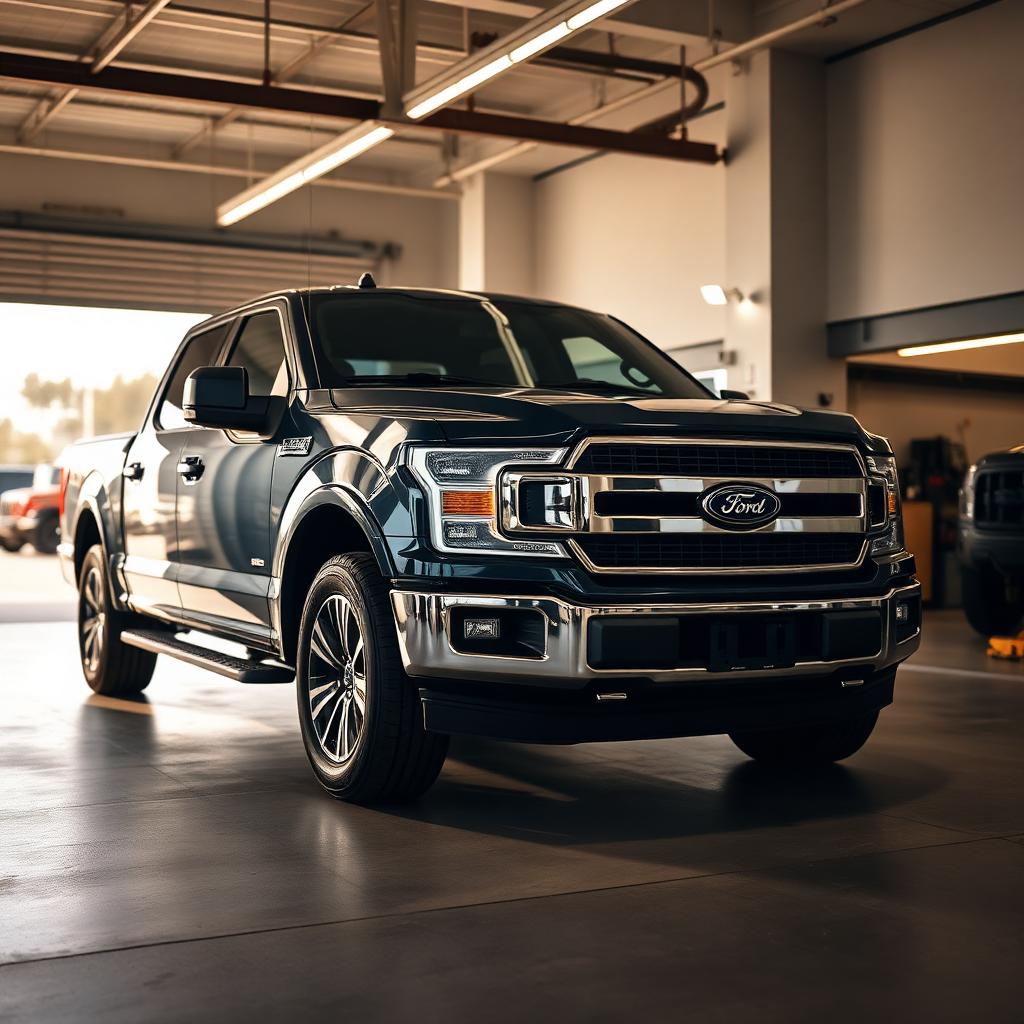
Si su vehículo Ford ha pasado más tiempo en el concesionario que en su entrada, no está solo — y no está atrapado con él. Ford opera uno de los programas de recompra del fabricante más activos del país, y la Ley de Garantía para el Consumidor Song-Beverly de California otorga a los propietarios de Ford una poderosa palanca para exigir una recompra completa, un vehículo de reemplazo o un acuerdo de efectivo y mantener cuando un defecto no puede repararse dentro de un número razonable de intentos.
Esta guía explica exactamente cómo funciona el programa de recompra de Ford en California, quién califica, cómo se ve el proceso paso a paso, y qué recuperan típicamente los propietarios. Cubrimos los defectos Ford más comunes que están impulsando recompras hoy — fallas de la transmisión PowerShift y de 10 velocidades, problemas del motor EcoBoost, fallas de infotainment SYNC, y defectos de software del Mustang Mach-E y F-150 Lightning — y explicamos por qué trabajar con un abogado de ley limón casi siempre produce un mejor resultado que negociar directamente con Ford.
¿Qué es una recompra de Ford?
Una recompra de Ford es una readquisición por el fabricante de un vehículo defectuoso bajo la ley limón estatal. En California, el estatuto que rige es la Ley de Garantía para el Consumidor Song-Beverly (Cal. Civ. Code §§ 1790-1795.8), y las reglas para vehículos motorizados nuevos están reforzadas por la Ley de Protección al Consumidor Tanner (Cal. Civ. Code § 1793.22).
Cuando Ford acepta una recompra, la empresa está obligada a reembolsar:
- Su pago inicial
- Todos los pagos mensuales hechos a la fecha
- Su saldo restante del préstamo o arrendamiento (pagado directamente al prestamista)
- Cargos de registro, impuesto sobre la venta y otros cargos oficiales
- Costos incidentales razonablemente incurridos — grúa, autos de alquiler y gastos similares
Ford puede hacer una sola deducción: un descuento por uso basado en el millaje al momento del primer intento de reparación del defecto. La fórmula en Cal. Civ. Code § 1793.2(d)(2) es millaje-al-primer-intento ÷ 120,000 × monto total pagado. Todo lo demás regresa a usted.
Ford también tiene una designación interna de recompra llamada RAV (Reacquired Vehicle), que es como se marca el título una vez completada la recompra. Un título con marca RAV significa que el vehículo se puede revender, pero solo con divulgación escrita completa y una garantía de un año/12,000 millas sobre el defecto que causó la recompra.
¿Quién califica para una recompra de Ford en California?
Generalmente califica si todo lo siguiente es cierto:
- Su Ford está cubierto por la garantía original del fabricante. Esto incluye la garantía integral de 3 años/36,000 millas, la garantía de tren motriz de 5 años/60,000 millas, la garantía de componentes híbridos/EV de 8 años/100,000 millas, y cualquier cobertura certified pre-owned.
- El vehículo tiene un defecto sustancial. Bajo la ley de California, un defecto es "sustancial" si afecta el uso, valor o la seguridad del vehículo. Los problemas cosméticos y molestias menores generalmente no califican; los defectos de transmisión, motor, eléctricos, frenos, dirección y ADAS casi siempre sí.
- Ford o un concesionario Ford autorizado ha tenido un número razonable de intentos de reparación. La Ley Tanner crea una presunción refutable de que el número es razonable si ocurre alguno de los siguientes en los primeros 18 meses o 18,000 millas, lo que ocurra primero:
- Cuatro o más intentos de reparación por el mismo defecto, o
- Dos o más intentos de reparación por un defecto que probablemente cause la muerte o lesiones corporales graves, o
- El vehículo está fuera de servicio por reparaciones bajo garantía por 30 o más días acumulados.
La ventana de 18 meses/18,000 millas solo activa la presunción — no es una fecha límite. Todavía puede calificar mucho más allá de esa ventana si su historial de reparaciones muestra que el defecto nunca se reparó dentro de una oportunidad razonable.
Los Ford arrendados califican bajo los mismos términos que los Ford comprados. Los Ford usados califican si queda cualquier garantía del fabricante o una garantía escrita del concesionario cuando los defectos aparecen por primera vez.
Los defectos de Ford más comunes que están impulsando recompras
Estos son los patrones de defectos que vemos más a menudo en reclamos de ley limón de California 2025-2026 contra Ford:
- Transmisión automática de 10 velocidades (10R80) — F-150, Mustang, Expedition, Ranger, Bronco. Cambios bruscos, golpes al entrar en marcha, golpes al bajar marchas y "vibración" entre 2da y 3ra. Ford ha emitido múltiples TSBs y actualizaciones de software, pero muchas camionetas continúan exhibiendo los mismos síntomas después del reflash.
- Transmisión de doble embrague PowerShift (DPS6) — Fiesta y Focus, 2011-2019. Objeto de la prolongada demanda colectiva y la investigación del DOJ. Vibración, patinaje y pérdida súbita del movimiento hacia adelante. Muchos propietarios todavía califican para recompras individuales de ley limón más allá del acuerdo colectivo.
- Problemas del motor EcoBoost — F-150 2.7L y 3.5L, Edge, Explorer. Intrusión de refrigerante en cilindros, estiramiento de la cadena de tiempo, fallas del turbocargador y consumo excesivo de aceite. Estos defectos a menudo se presentan como fallos de encendido, advertencias de bajo refrigerante y paros del motor.
- Fallas de infotainment SYNC 3 y SYNC 4. Pantallas negras, displays congelados, falla de cámara de reversa y desconexiones de Bluetooth/Apple CarPlay. Las fallas de SYNC se tratan como sustanciales porque deshabilitan la cámara de reversa requerida federalmente.
- Mustang Mach-E — descarga de batería de 12V, fallas de contactor de alto voltaje, fallas de carga y advertencias "Stop Safely Now".
- F-150 Lightning — recall del contactor de batería, fallas del puerto de carga, fallos de BlueCruise y actualizaciones de software que dejan la camioneta inservible por días.
- BlueCruise y Co-Pilot360 ADAS — frenado fantasma, oscilación del mantenimiento de carril y caídas del crucero adaptativo.
- Diésel 6.7L Power Stroke — fallas del sistema DEF, fallas del actuador del turbo y modos de derate forzado.
Si sus órdenes de reparación mencionan cualquiera de los anteriores, su caso probablemente es fuerte.
El proceso de recompra de Ford, paso a paso
Paso 1: Construya su rastro documental de órdenes de reparación
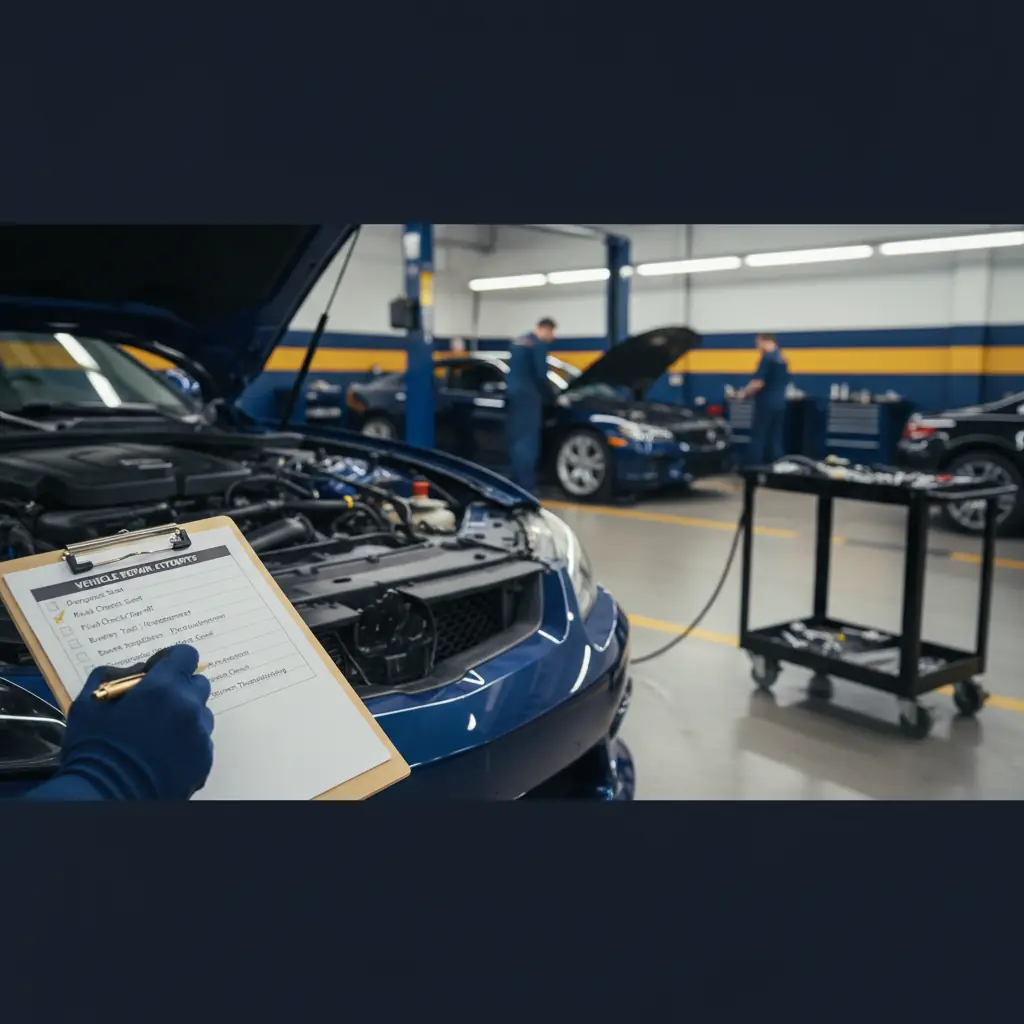
Cada visita al concesionario Ford debe generar una Orden de Reparación (RO). Pida una copia cada vez. La RO debe listar:
- La fecha de entrada y fecha de salida
- El millaje en la entrega
- Su queja como cliente, en sus propias palabras
- El diagnóstico del técnico y las piezas y mano de obra realizadas
- Cualquier TSB o recall abierto de Ford referenciado
Si el concesionario escribe "no se pudo duplicar" o "no se encontraron códigos", insista en que la RO refleje sus síntomas reportados. Un patrón de quejas sin resolver es lo que gana casos de ley limón — incluso cuando el concesionario no puede reproducir el problema en el elevador.
Paso 2: Envíe a Ford una demanda escrita (o haga que su abogado lo haga)
Una vez que tenga cuatro intentos de reparación por el mismo defecto, dos intentos por un defecto de seguridad, o 30+ días acumulados fuera de servicio, usted (o su abogado) envía a Ford un aviso escrito exigiendo recompra o reemplazo bajo Cal. Civ. Code § 1793.2(d). Ford típicamente enruta estos al Departamento de Vehículos Readquiridos (RAV) en Dearborn para revisión.
Paso 3: Ford responde — generalmente con uno de tres resultados
- Oferta de recompra. Ford acepta tomar el vehículo de vuelta y reembolsar su dinero menos el descuento por millaje. Este es el resultado más común en casos fuertes.
- Oferta de reemplazo. Ford ofrece un Ford nuevo sustancialmente idéntico. Puede aceptarlo o insistir en una recompra — la elección es suya bajo § 1793.2(d)(2).
- Acuerdo de efectivo y mantener. Ford le paga una suma global para compensar el valor disminuido del vehículo, y usted lo sigue conduciendo. Esto es común cuando el defecto es molesto pero no crítico para la seguridad, o cuando genuinamente quiere conservar la camioneta.
Paso 4: Entrega y pago
Si acepta una recompra, firma un acuerdo de entrega, entrega las llaves y el título en un concesionario Ford designado, y Ford transfiere el reembolso dentro de algunas semanas. Los pagos del préstamo van directamente a su prestamista. Típicamente sale sin deber nada por el vehículo.
Si Ford se niega o ofrece muy poco, el siguiente paso es presentar demanda bajo Song-Beverly. La mayoría de los casos se resuelven antes del juicio porque Cal. Civ. Code § 1794(d) requiere que Ford pague los honorarios de su abogado además de su recuperación si gana — lo que hace que un litigio prolongado sea costoso para Ford.
Resultados comunes: lo que típicamente recuperan los propietarios de Ford
Los resultados varían según el vehículo, el millaje, el historial de pagos y la fortaleza del expediente de reparaciones, pero estos son rangos realistas basados en los casos que vemos:
- Recompra completa en una F-150 de 2 años con 18,000 millas, $62,000 financiados, $9,000 pagados a la fecha: aproximadamente $9,000 de vuelta al propietario, el saldo de $53,000 del préstamo pagado directamente al prestamista, impuestos y cargos reembolsados, menos aproximadamente $2,800 de descuento por millaje. El propietario se va con efectivo en mano y sin préstamo.
- Efectivo y mantener en un Mach-E con descarga intermitente de 12V, 25,000 millas: acuerdos de $8,000-$18,000 son comunes, el propietario conserva el vehículo y la garantía.
- Reemplazo en una Bronco con defectos persistentes de hardtop y SYNC: Ford intercambia por una Bronco comparable del año en curso, con crédito prorrateado por millaje.
- Multa civil en casos de violación intencional: Cuando Ford ha sido notificado del defecto y se niega a actuar, Cal. Civ. Code § 1794(c) permite una multa civil de hasta dos veces los daños reales. Estas suman decenas de miles a una recuperación.
En cada escenario, los honorarios de su abogado los paga por separado Ford bajo § 1794(d) — no salen de su recuperación.
Por qué no debería negociar directamente con Ford
El departamento RAV de Ford negocia reclamos de ley limón todos los días. Usted no. Los errores más comunes que cometen los propietarios que se representan a sí mismos:
- Aceptar la primera oferta, que casi siempre es 30-50% por debajo de lo que recupera un propietario representado.
- Firmar un release que renuncia a la multa civil y a los reclamos de honorarios de abogado.
- Perder el estatuto de limitaciones (generalmente cuatro años desde el incumplimiento).
- No preservar las órdenes de reparación o aceptar reparaciones de "buena voluntad" que no cuentan para la presunción de la Ley Tanner.
La regla de traspaso de honorarios de California (§ 1794(d)) significa que un abogado calificado de ley limón no le cuesta nada de su bolsillo — Ford paga los honorarios si usted gana, y las firmas reputadas trabajan por contingencia para las raras pérdidas. No hay razón económica para hacerlo solo.
Preguntas frecuentes
¿Cuánto tiempo toma una recompra de Ford en California?
La mayoría de los casos se resuelven en 3 a 6 meses desde la fecha de la demanda. Las recompras directas en casos bien documentados a veces se resuelven en 60 a 90 días. Los casos que llegan a demanda pueden tomar 9 a 15 meses pero típicamente se resuelven antes del juicio.
¿Necesito seguir haciendo mis pagos de préstamo o arrendamiento durante el caso?
Sí. Detener los pagos dañará su crédito y complicará la recompra. El reembolso incluirá cada pago que hizo, incluyendo los hechos durante el caso.
¿Una recompra de Ford dañará mi crédito?
No. Una recompra de ley limón no es una recuperación de bienes, entrega ni incumplimiento. Ford paga su préstamo en su totalidad y la cuenta cierra en buen estado.
¿Qué pasa si mi Ford está fuera de garantía?
Todavía puede calificar si el defecto apareció por primera vez y fue reportado durante el período de garantía — incluso si los intentos subsecuentes de reparación ocurrieron después de que la garantía expiró. Guarde cada RO del período de garantía.
¿El programa de recompra de Ford cubre Fords usados o certified pre-owned?
Sí, si queda cobertura del fabricante o una garantía escrita CPO vigente cuando aparecen los defectos. Los vehículos Ford CPO llevan una garantía integral de 12 meses/12,000 millas más una garantía de tren motriz de 7 años/100,000 millas desde la fecha original de puesta en servicio.
¿Qué pasa con las demandas colectivas federales de Ford — estoy excluido?
Los acuerdos colectivos (PowerShift, F-150 10 velocidades y otros) usualmente no impiden una recompra individual de ley limón en California, especialmente si optó por salir o si sus hechos caen fuera de la definición de la clase. Un abogado puede confirmarlo en una llamada.
Si está atrapado en el ciclo de reparación de Ford, no espere. Las órdenes de reparación son más fáciles de reunir mientras el vehículo aún está bajo garantía, y el estatuto de limitaciones de cuatro años de California es más corto de lo que la mayoría de los propietarios espera.
LemonLaws.com maneja reclamos de recompra de Ford en todo California sin costos de su bolsillo — bajo Cal. Civ. Code § 1794(d), Ford paga honorarios de abogado y costos cuando ganamos. Contáctenos para una consulta gratuita, sin compromiso, y le diremos en minutos si tiene un caso.
En resumen: Si su vehículo ha estado en reparaciones repetidas bajo garantía, podría tener un caso fuerte de Ley Limón. Una consulta gratuita no le cuesta nada.
¿Cree que su auto es un limón?
Obtenga una evaluación de caso gratuita de nuestros abogados experimentados. Sin honorarios hasta que ganemos.